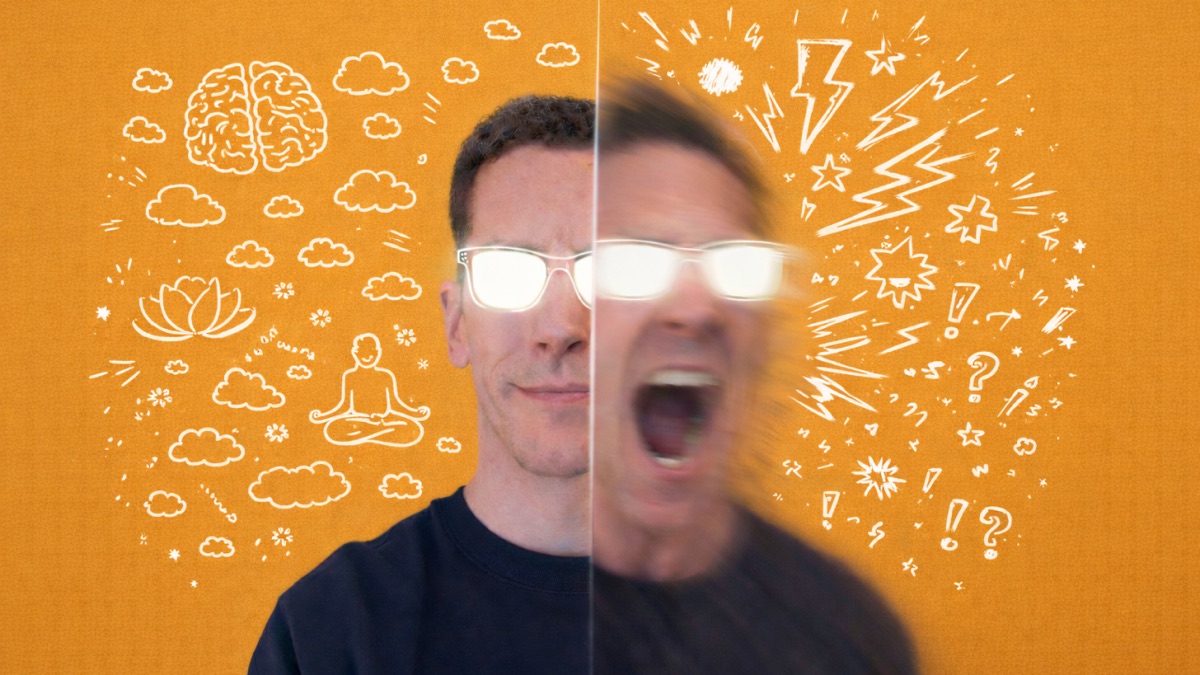
The psychology quietly shaping politics, medicine, and our AI debates
Most of us like to think we’re open-minded. Evidence-driven. The sort of people who change their views when the facts change.
In reality, we’re something else entirely.
When forced to choose between being right and being comfortable, the human brain overwhelmingly chooses comfort—and then rewrites reality to justify it.
This isn’t a moral failing. It’s a psychological mechanism. And once you understand it, modern politics, public discourse, medicine, and even our strange conversations about AI start to make a lot more sense.
The mechanism has a name.
Cognitive dissonance.
The moment rational humans quietly died
In the middle of the twentieth century, psychology was still operating under a flattering assumption: that humans were broadly rational creatures. We gathered information, weighed options, and made decisions. When we behaved irrationally, it was assumed we lacked data.
Leon Festinger didn’t buy this story.
What fascinated him wasn’t error, but contradiction—specifically what happens when a person holds two beliefs that cannot comfortably coexist. In 1957, he published A Theory of Cognitive Dissonance, arguing that psychological inconsistency produces discomfort, and that humans are strongly motivated to reduce that discomfort.
Crucially, we don’t do this by changing our behaviour. We do it by changing our beliefs.
Truth, in other words, is negotiable. Comfort is not.
Psychology absorbed this insight quickly. Behavioural science was built on it. (Economics, less enthusiastically, still prefers the idea of rational actors—largely because the alternative is harder to model!!!!)
The cult that should have collapsed—but didn’t
Festinger’s most famous demonstration didn’t come from a laboratory experiment. It came from a flying-saucer cult in 1954.
The group called themselves *The Seekers, led by *Dorothy Martin, who claimed to receive messages from extraterrestrials through automatic writing. The aliens, she said, would arrive on December 21st, 1954, rescuing the faithful before a catastrophic flood destroyed the Earth.
Members didn’t merely believe this. They acted on it. They quit jobs, sold possessions, and cut ties with sceptical friends. This wasn’t casual belief; it was identity-level commitment.
When the date arrived, nothing happened. No aliens. No flood. Just a deeply awkward silence.
If humans were rational, the belief should have collapsed immediately. Instead, the group doubled down. The revised explanation was that their faith had saved the world. The apocalypse had been cancelled as a reward for belief.
Festinger’s conclusion was quietly devastating: when people invest heavily in a belief, disconfirming evidence doesn’t weaken it—it strengthens it. Abandoning the belief would have meant admitting that the sacrifice, embarrassment, and social cost had all been for nothing.
Psychologically, that was intolerable.
So the belief survived.
How this shows up in normal, respectable people
Most cognitive dissonance is less dramatic than a failed apocalypse. It appears in far more ordinary places.
It shows up when we defend systems we helped build long after their flaws are obvious. When we justify habits we fully understand are harmful. When leaving a job, a worldview, or a political position would require admitting that years of effort might have been misplaced.
In these moments, behaviour stays remarkably stable. What changes is the story we tell about it.
Rory Sutherland once joked that the human brain behaves less like a scientist and more like a press officer. Its job isn’t to discover the truth. It’s to produce a coherent narrative explaining why whatever just happened was, in retrospect, the right thing all along.
Cognitive dissonance is the press office at work.
A medical example, with real consequences
This matters because cognitive dissonance doesn’t just distort opinions. It shapes decisions with real-world consequences.
Years ago, I worked on a campaign for Familial Hypercholesterolaemia (FH), a genetic condition in which children are born with dangerously high cholesterol levels.
The clinicians treating these children knew two things very well. First, that high cholesterol causes cardiovascular disease and heart attacks. Second, that children don’t have heart attacks.
Both beliefs were true. Together, they created paralysis.
Aggressive treatment felt wrong, even unethical. And so cholesterol levels were consistently under-treated—not because doctors were careless, but because the alternative implied something emotionally unacceptable: if high cholesterol causes heart attacks, and this child has high cholesterol, then this child is at risk.
That tension had to go somewhere.
So the mind resolved it neatly. Children don’t have heart attacks. Therefore this cholesterol must be different. Therefore treatment can wait.
We didn’t attack this logic head-on. That would have triggered defence. Instead, we placed the contradiction at the centre of the campaign: children don’t have heart attacks.
And then we calmly showed that they do—just not in the way we imagine. Same biology. Same progression. Different labels. Arteries, it turns out, are indifferent to age.
The shift didn’t come from new information. It came from relief. The dissonance resolved. Clinicians were able to act on what they already knew, once the psychological tension was removed.
This is behavioural science at its most effective: not persuasion, not education, but resolution.
Why this keeps appearing in our AI debates
Once you start seeing cognitive dissonance, you can’t unsee it—particularly in conversations about AI.
People will readily agree that AI is about to transform the knowledge economy. Then, often in the same sentence, explain why it won’t meaningfully affect their job. It’s too human. Too nuanced. Too complex.
This isn’t ignorance. It’s protection.
Accepting that AI might disrupt your role forces an uncomfortable identity shift. It raises questions about value, security, and relevance. That discomfort has to go somewhere, so the brain resolves it with exception stories. AI will change everything—just not here.
As with the doctors, the resistance isn’t to the idea. It’s to the feeling.
Sitting with the discomfort
Cognitive dissonance isn’t a flaw in human reasoning. It’s the cost of caring about coherence in a messy world.
Most people spend their lives trying not to feel it, smoothing it over with explanations that make things sit more comfortably. The people who think best do something rarer. They notice the discomfort and pause.
They don’t rush to resolve it. They let it linger just long enough to ask what it might be pointing to. Because sometimes, that uneasy feeling isn’t a threat.
It’s a signal.
And learning to tolerate that signal—without immediately reaching for a comforting narrative—is about as close as we get to thinking clearly in an age that rewards certainty.
Or, put more simply:
We don’t avoid being wrong because we hate error. We avoid it because we hate discomfort.
And understanding that may be the first genuinely uncomfortable step toward Beautiful Thinking.