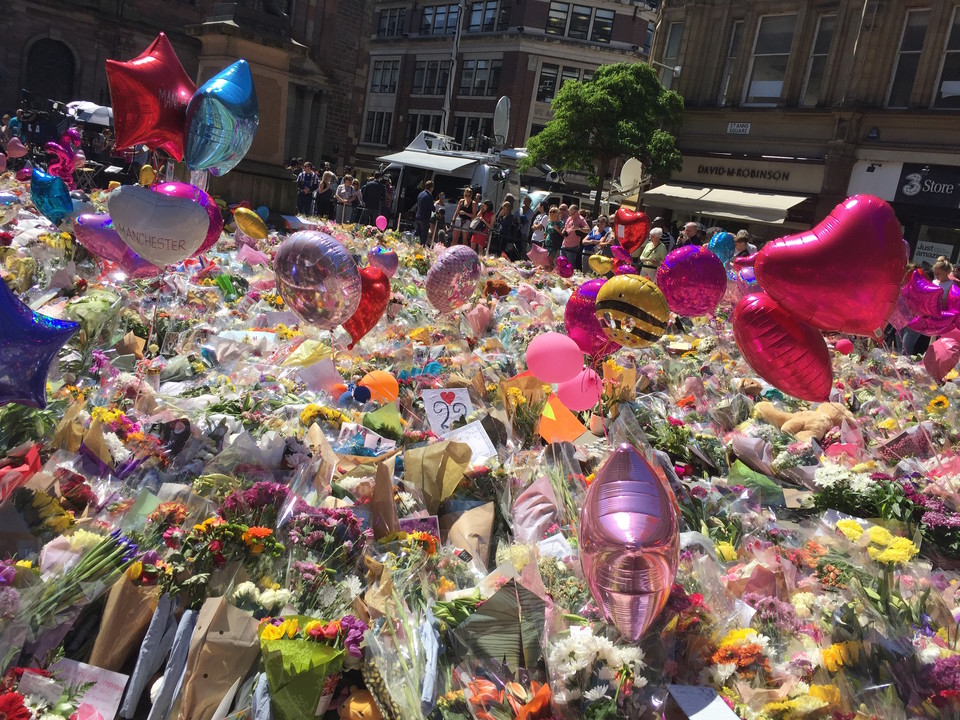
This week, the Western World was once again rocked by a murderer committing a horrendous act, killing 22 people, including children, at a concert in Manchester.
Living and working in Manchester as I do, I have felt the effects of this acutely. It can't not affect you.
I, as many others are, am still trying to process Monday's events. But in the back of my mind, as a marketeer (and presumably to occupy my mind from the terrible sadness that hangs over us) I have been wondering how to reconcile my own mantras about brands, with events like this.
In an uncomfortable display of cognitive dissonance my mind (who apparently I refer to in the third person) looks to coach brands to behave more humanly, and admonish brand strategies that are impersonal and do not relate to the audience. However, my mind is reconciling the emotional and intellectual turmoil of what right does a f***ing brand have being involved in a conversation that is this important, this raw, this emotional.
But then - how could a brand ignore such an event. They can't still be talking about flash-sales for bath salts at a time like this, can they?
My question then - what is a Brand to do.

On Tuesday (the day after the attack), I went for a walk around the city centre at lunchtime. It was obvious that something had happened. The city lacked its usual vibrancy and energy. But what also struck me was how many shops were closed (my guess around 40%). It made me start to think what companies should do in this situation.
I wondered, were they shut because companies were worried about their employees and suggested they take a day off. Or maybe they were shut as a sign of respect e.g. 'selling bath salts seems ludicrously shallow in the face of such depth of horror, that we can't possibly be open today'.
I then started reflecting on the shops that were open. Were they open because they wanted to defy the terror - 'f-you terrorists, you will not have our fear and we will remain open regardless of your fear mongering!'. Or was it just accident ('oh, I didn't think about telling the team not to come in'), or simply callous commercialism.
So this back and forth has made me realise - that even in this small choice - do we open, do we close, the day after a terrible event - that brands can't easily do right in such a situation. But, at the same rate - they can't actually do nothing and ignore it.

As I flicked through social media to see how the city reacts, I came across this tweet from Manchester United. It feels right. Like it is in solidarity, and keeping with the city's mood. And indeed, perhaps in this case this brand has a responsibility to behave like this - adding comfort to a football made city, especially 'A City United', a nod to the unity of both Blue (Man City) and Red (Man United) in the city.

But you contrast that to McLaren who have hashtagged their car, and it feels like we are skirting on the edge of decency. Showing support is good, here the use of a # trivialises actual support in order to gain attention on social media. Why else have a # other than to get attention for a topic?
Lewis Hamilton has 'Manchester' written under his gearstick. Sports teams wear black arm-bands. These feel like appropriate nods of support. Jumping on the # to increase your social media metrics does not.

In the wake of the Paris attacks in 2015, a few brands waded in to show their solidarity. Uber branded all their virtual cars with the French tricolour, to mixed reviews. But then brands like Google and AirB&B offered their products freely to help people affected by the attacks, which seems a more authentic use of their brand capital.
On Monday night, Dominos donated free pizzas to the surgeons and emergency staff dealing with the attacks aftermath. Taxi companies offered free rides to people wanting to get home. Facebook displayed their safety function so you could let loved ones know you were safe. These feel like genuine uses of brand assets to act with humanity, rather than riding the wave of publicity that comes with such an event.
In conclusion, it is a tricky one. It would be ridiculous for brands to continue acting normally in the face of these events happening (however relaxing their bath salts are), but then they need to behave appropriately. Any sniff that they are gaining personal benefit from their actions and people will (rightly) turn against them. So, in the same way that you give flowers to someone bereaved - you don't do it because you want praise for your choice in flowers, you do it because you want to provide them with even the smallest amount of support, to ease the smallest amount of pain, for the smallest of moments.
Demonstrations of solidarity must be relevant and appropriate. Essentially, Brands need to make their behaviour genuine and thoughtful, you know - like an actual human would.
**Brands must remember that it's not about you. **