Last week, something rather important happened in healthcare — and almost nobody outside a small group of obsessives noticed.
OpenAI launched ChatGPT Health. A few days later, Anthropic followed with Claude for Healthcare. On the surface, this looks like another entry in the long list of “AI is coming to medicine” announcements, which we’ve all learned to greet with polite nodding and a return to email.
But this one feels different. Not louder. Not flashier. Just… structurally significant.
Here’s why.
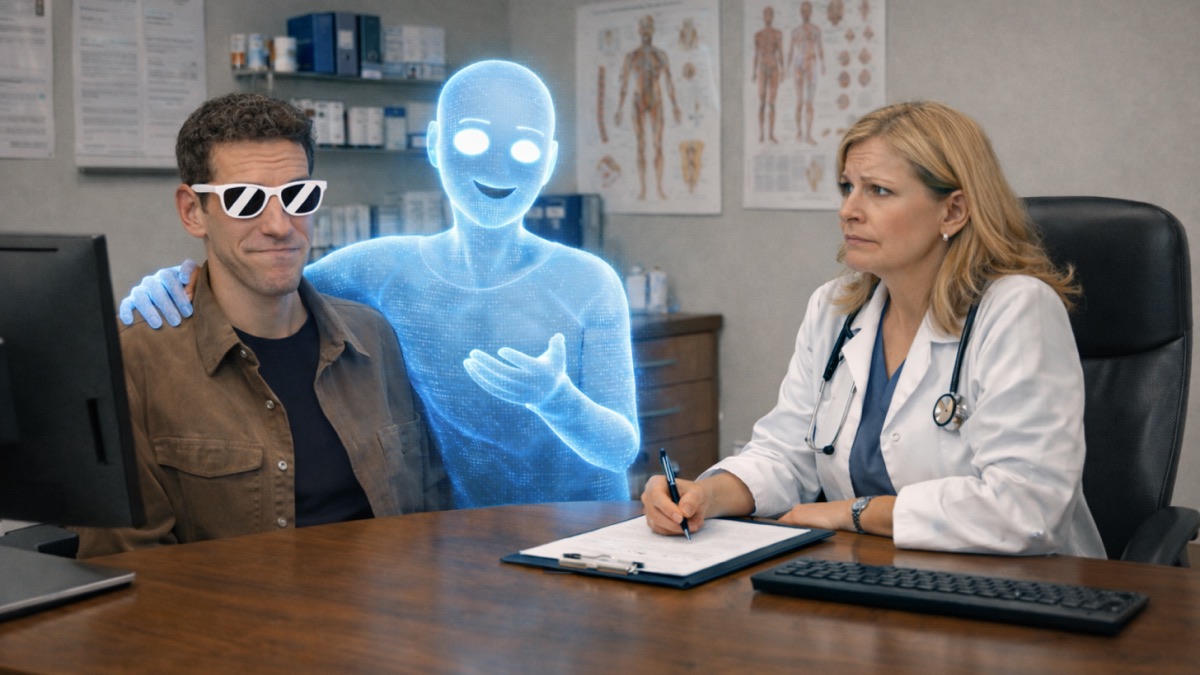
Picture a very ordinary GP appointment in the near future. The patient sits down and says something like: “I’ve pulled together my blood tests, sleep data, activity, and symptoms. ChatGPT thinks the pattern looks more inflammatory than stress-related.”
No diagnosis. No challenge. No melodrama. Just a direction of travel.
That moment matters more than it appears to.
For years, clinicians have dealt with “Dr Google”: patients arriving armed with printouts, forums, and half-digested facts. Annoying, certainly, but manageable — because the clinician still owned the act of interpretation. The job was to turn noise back into sense.
This isn’t that.
ChatGPT Health doesn’t hand over raw information; it hands over a story. A synthesis. Something that already feels like an explanation. The consultation no longer starts with data. It starts with a hypothesis.
Now, in fairness, primary care doctors are already used to this in another form. Specialists analyse. GPs implement. Delegated interpretation is not new. The difference is that specialists sit inside a shared professional hierarchy, with credentials, accountability, and a long-established social contract.
AI doesn’t. And oddly, that may make it more persuasive, not less.
It isn’t rushed. It doesn’t look tired. It sounds comprehensive. And crucially, it arrives via the patient, not the system — which subtly flips the power dynamics in the room.
Here’s the uncomfortable truth: doctors won’t need years to get comfortable with this. They’ll need months. Because much of what these systems suggest will be… broadly sensible. Directionally right. Not perfect, but good enough to agree with more often than not — especially in primary care.
Patients already suggest treatments and investigations that clinicians accept every day. If the same suggestion is better structured, better contextualised, and quietly backed by “something clever”, resistance melts away. And if the patient presents it as their own understanding, rather than “what the AI said”, the source becomes irrelevant.
That’s the tipping point.
This is how medicine shifts from human-led to machine-led care. Not machine-decided — but machine-directed. The centre of gravity moves, gently, almost apologetically.
Is that a bad thing? I’m not convinced.
We already ask an impossible amount of clinicians. There are more drugs, more data, more guidelines, and more peer-reviewed papers published every day than any human brain can reasonably absorb. In oncology alone, it’s well over a hundred papers a day. No amount of professionalism fixes that.
Driverless cars didn’t win because they’re flawless. They won because they’re less overwhelmed than humans. Healthcare may follow the same logic — not because machines are brilliant, but because they are consistent, tireless, and increasingly competent at synthesis.
And this is how big shifts usually happen. Not with a revolution. With a reasonable suggestion that everyone nods along to.
Genuine question: What happens when clinicians find themselves agreeing with the AI… most of the time?
I suspect we are about to cross that line.