Lately I’ve become a little obsessed with the future that AI is dragging toward us. I even wrote a piece arguing that it’ll take most knowledge-work jobs within a decade — mine included.
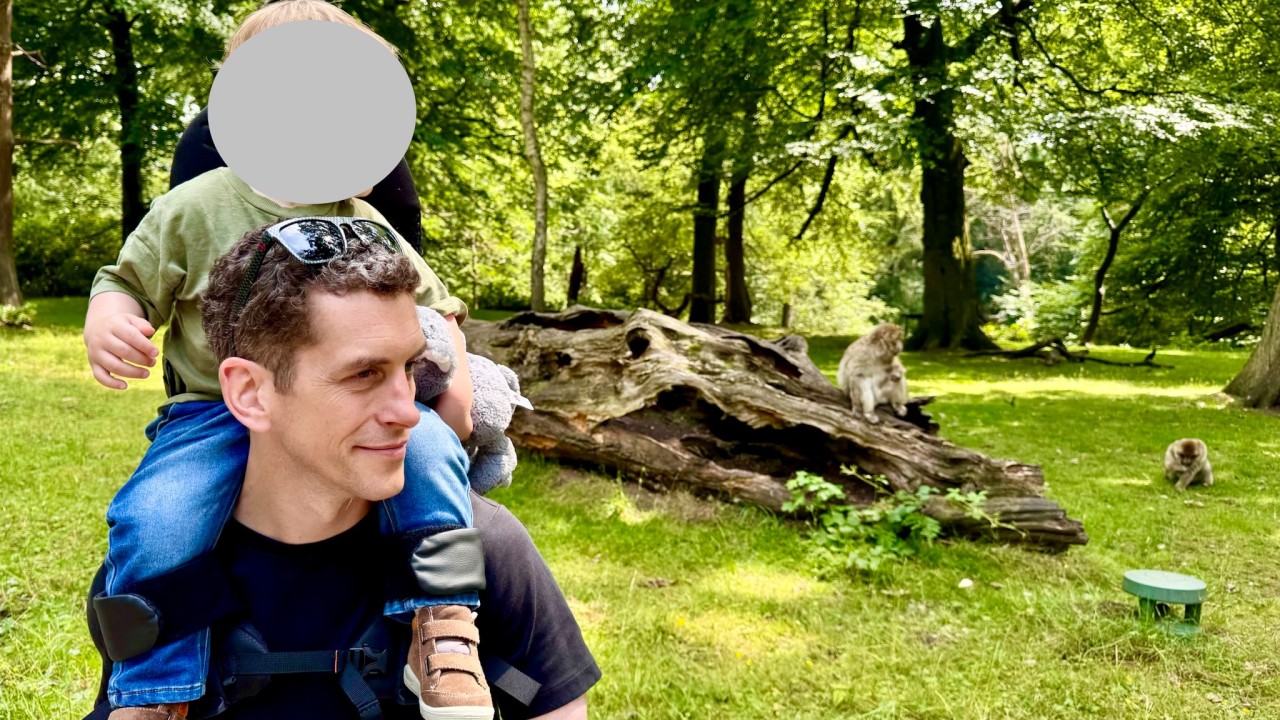
But since becoming a parent almost 2 years ago, that fascination has started to mutate. Because while I spend my days thinking about how AI will rewrite the rules for brands, businesses, and society, at home I’m trying to raise a tiny human to survive — and maybe even thrive — in whatever comes next.
That collision — between futurism and fatherhood — has been gnawing at me. It’s one thing to build a strategy for a company facing an uncertain decade. It’s another to build a childhood for a person facing an uncertain century.
I’m writing a book on scenario planning — the art of preparing for futures you can’t predict. It’s a discipline built for companies that can’t see what’s coming, but still need to act. And lately I’ve realised: parenting is the same challenge in miniature. How do you design for your own inability to see the future? How do you create a now that flexes — so that whatever future lands, your child is ready for it?
That’s what got me digging into the people already wrestling with this: the ones asking how to prepare children for a world that might not resemble ours at all. I’m not talking about French-learning apps or toddler coding camps. I’m talking about raising humans for an age where intelligence itself is no longer a human monopoly.
The Projection Fallacy
The more I read, the more it hit me: we’re all suffering from a kind of collective hallucination about the future. Psychologists call it the projection fallacy — the quiet human glitch that makes us imagine tomorrow as a shinier version of today.
It’s why most people picture the future with flying cars but the same traffic jams. It’s why we think our kids will need coding lessons and PowerPoint skills when, by the time they graduate, code will write itself and PowerPoint will narrate its own slides.
Education is the clearest casualty of this blindness. Schools have always been built for the world we just left — a decade or two out of sync with reality. But this time, the lag isn’t years; it’s eras.
Right now, teachers are banning ChatGPT because they think it’s cheating. Meanwhile, my son will grow up in a world where talking to machines that talk back will be as normal as talking to a friend. He may never even learn to type; the keyboard could soon join long division and cursive handwriting in the Museum of Useful Obsolescence.
That’s the gap: a generation learning rules that no longer apply, from adults still pretending the old map is accurate.
Julia Wise, a mother of three and futures thinker, wrote an article on this subject which went viral - “Raising children on the eve of AI.” She describes the dissonance of preparing her kids for college and careers while half-believing those things might be obsolete. She’s not wrong. Some futures are bright, others catastrophic, but almost none look like our current syllabus.
And yet — we keep doubling down on the idea that success is about recall, credentials, and compliance. That’s projection fallacy in action: mistaking the path we know for the ground that’s still there.
The Alpha Experiment
A few people are already trying to rip up that map completely.
In Austin, a small network called ****Alpha School has built a prototype of education for the post-AI age. Students spend two hours a day on AI-driven academics — software that adapts to their speed and level — and the rest of the day learning the things no algorithm can master: collaboration, entrepreneurship, public speaking, physical grit.
Second graders have to run five kilometres and deliver TED-style talks judged by an AI speech coach. Middle schoolers start Airbnbs and sail boats. It sounds absurd until you realise what they’re really teaching: agency.
Alpha’s founders believe that in an AI-saturated world, the only durable advantage is the ability to decide what matters and act on it. They’ve automated the tutoring so they can humanise the rest.
It’s radical. Possibly elitist. Almost certainly flawed. But it’s a clue to the kind of thinking we’ll need. Because the opposite — doubling down on standardised tests and homework — feels like raising blacksmiths on the eve of the factory.
The Human Curriculum
If the machines take memory and recall off our plates — good riddance. Those were never the most interesting parts of being human anyway. This new freedom demands we focus only on the skills that truly define our existence.
This is the Human Curriculum — the subjects no algorithm can master for us:
Judgment and Problem Formulation: It’s no longer about finding the answer, but about spotting the right question — learning to navigate ambiguity instead of memorising certainty.
Emotional Regulation and Empathy: How to stay kind, curious, and calm when everything around you accelerates. The capacity to self-soothe and still care deeply may become the highest form of intelligence.
Social Navigation: Collaboration, leadership, disagreement. It’s about learning the art of friction: how to make things with other messy, unpredictable humans. (It takes us back to our evolutionary roots: the Social Brain hypothesis suggests that social complexity is what drove human intelligence in the first place.) It also means modeling new norms, like the visibility the Parenting Out Loud movement champions for fathers.
Physical Sovereignty: The mastery of your biological core—your strength, attention, sleep, and gut health. This physical grounding is the last un-uploadable frontier of the human self.
These aren’t soft skills. They’re survival skills.
I spend half my day thinking about how unrecognisable the next ten years will be — and the other half comparing local schools and checking the family pension plan. That’s the contradiction of parenting now. We all sense the shift ahead, but we cling to the rituals: catchment areas, exam boards, university rankings.
We plan for a future we privately suspect won’t arrive. But pretending the old world will keep ticking doesn’t make it true. And refusing to think about the new one doesn’t make it go away.
The Excited Realist’s Manifesto
I’m not an education expert. I’m a parent who can’t stop looking around the corner. And what I see is this: whatever schools my son attends, they won’t be enough — at least not on their own.
So my job is to build the rest of the curriculum. Curiosity. Adventure. Emotional stability. Love. And, yes, probably rugby.
Every parent needs to articulate what they’re really trying to educate their child for. If you’re raising your kid as if the world will stay the same, then — I’m sorry — your kid won’t do as well as mine. I’ll mess him up in a hundred other ways, but not this one.
Because the only thing we know about the future is that it won’t look like the past. And the only thing worth teaching a child is how to stay human in a world that keeps changing what “human” means.