If comedy runs on surprise and AI runs on probability, then the final frontier isn’t intelligence. It’s laughter.
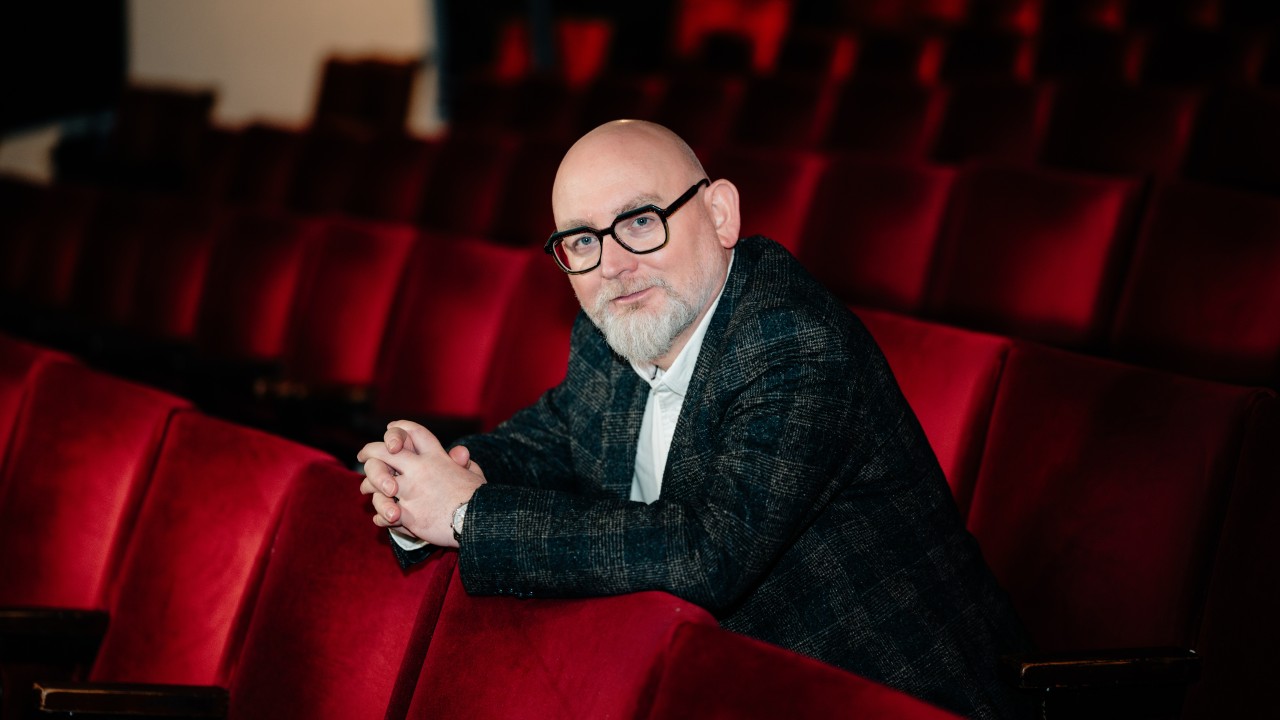
It was one of my favourite conversations this year. A blue-sky morning. Two expensive coffees. Across the table: Tim Reid — BAFTA-winning writer of Car Share, the Peter Kay sitcom that turned the space between work and home into something tender and absurd. Tim’s one of those rare creatives who can explain the mechanics of funny without killing it.
He’s spent his career chasing that strange chemical moment when an idea tickles the brain — whether it’s a line in a script or a flash of insight that makes an entire room exhale and go, oh… that’s true.
“AI,” he said, “is like a really intelligent friend who knows everything. And has no imagination.”
That, I realised, might be the single best description of artificial intelligence yet written. And it became the heartbeat of our conversation: if comedy is surprise and AI is probability, can the machine ever make us laugh?
The tickle test
You can’t tickle yourself. You know where your fingers are going. Your brain predicts the motion, smooths it out, kills the laugh before it arrives.
That’s what AI does. It predicts. It smooths. It kills the tickle.
Someone else — with their own timing, their own rhythm, their own unpredictable fingers — can make you squeal. That’s surprise. That’s comedy.
“A great joke and a great idea are the same thing,” Tim said. “A surprising truth.”
And that, he argued, is the last piece of magic machines can’t fake: that involuntary jolt of recognition. When you laugh, your neurons have just been ambushed by truth wearing a funny hat.
Car Share, and the beauty of the bad idea
Reid’s own career proof of concept started with what sounded like a terrible pitch: two people, one car, half an hour of conversation each way.
Every commissioner would have laughed it out of the room — and not in a good way. But he and co-creator Paul Coleman never asked permission. They wrote six full episodes before showing anyone, partly out of naivety, partly to protect the tickle. By the time Peter Kay read it, the thing already had a pulse.
The magic of Car Share isn’t in the car. It’s in the moments between the lines — the micro-truths of awkward colleagues and half-missed jokes. The human static that lives in shared space. It worked because it felt real, and because it was new.
AI could have synthesised every road-trip movie ever made. It wouldn’t have written that.
Why surprise beats probability
Comedy is a high-wire act of expectation and violation. AI is the safety net — it exists to remove risk. One optimises for what usually happens; the other lives or dies on what shouldn’t.
That’s why even a bad open-mic night is more human than a perfect algorithmic punchline. The flop, the pause, the stumble — that’s the cost of surprise. You can’t model it, only risk it.
And when you strip away the jokes, you realise this isn’t about humour at all. It’s about the final human function AI can’t reproduce: authentic unpredictability.
The sitcom that never lived
So I asked him the obvious question. If an AI wrote a sitcom — characters, dialogue, everything — would it be funny?
He didn’t hesitate.
“No. Not if we knew it was AI. Because comedy is connection. You laugh because you know another human saw the same madness you did.”
There’s a quiet profundity in that. We laugh with people, not at the machine. Humour is social proof of shared experience — the relief that someone else also noticed how weird this all is.
Maybe if the AI wrote about itself, Tim mused — its own awkward navigation through the human world — then we’d laugh. Because that would be authentic.
“An AI writing a sitcom about being AI? That could work,” he said. “Because it’s true to its own weird life.”
Which is kind of perfect: the only way a machine could make us laugh is by being honest about not being human.
The tickle remains ours
We finished our coffees. The morning sun had that smug Manchester brightness that makes everything feel briefly eternal.
If intelligence is a race to be right, surprise is the art of being wrong in an interesting way. AI will keep winning the first. Humans still own the second.
Because until a machine can forget where its fingers are going— until it can surprise itself— the tickle belongs to us.
P.S. Tim Reid helps teams and leaders rediscover that tickle—through creativity, storytelling, and humour.If your business could use a little more laughter (and a little less probability), find him at ****timreid.co.