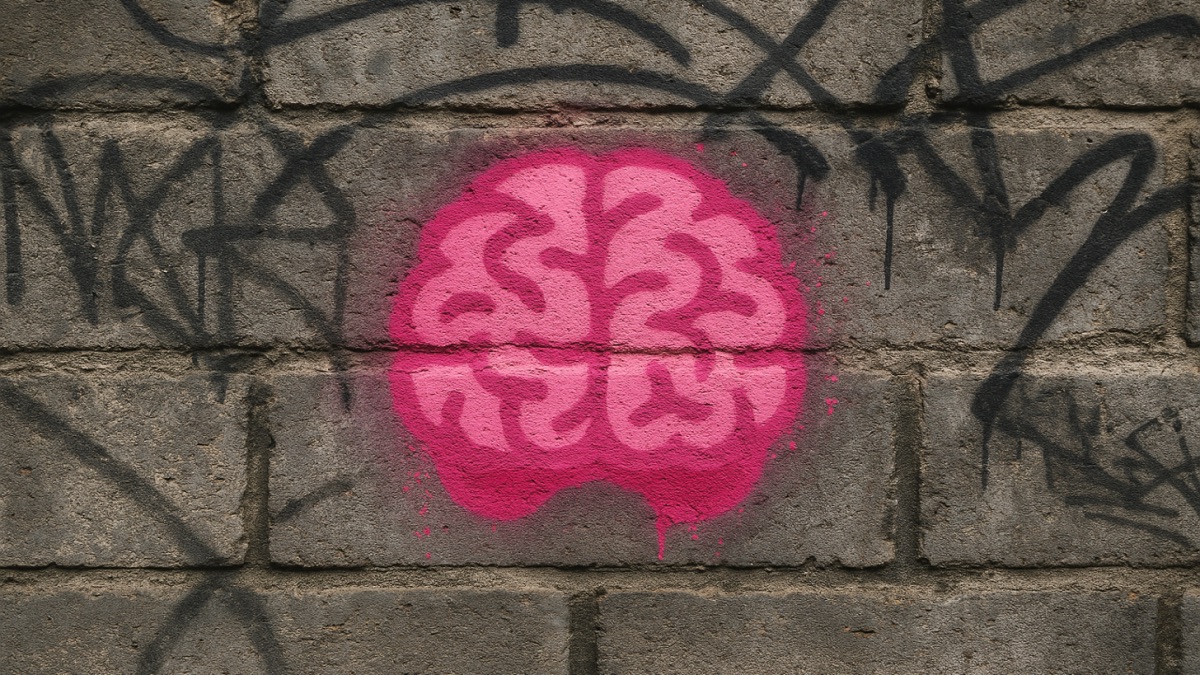
It was 2017, and I was deep in the trenches of a multiple sclerosis brand. “Brain fog” was the symptom du jour—slippery, hard to pin down. My junior at the time, Ryan (who I’m convinced is now a spy), stumbled on a forum in New Zealand. Patients weren’t just talking about brain fog—they were showing it. Blurry landscapes, ghosts in the mist. Words had failed them, so they turned to images.
That was the spark.
At the same time, emojis were becoming the fastest-growing language in the world. I did a quick search. No brain emoji. Not one. A gap in the world’s language of feelings.
So, I took the idea to our creative director, the brilliant Helen Godley. She cracked open her notebook and—no joke—had been doodling brain emojis all week. Serendipity in action.
We decided to pitch it to Unicode, the global emoji gatekeepers. To get an emoji approved, you can’t just say “It’s cool.” You have to prove people will use it. We had to show that the brain wasn’t just about anatomy—it was a symbol for mental health, for how we feel when words fail us.
So we did the research: search terms, Twitter chatter, the whole caboodle. We found proof that people were desperate for a new way to talk about what was going on in their heads.
Unicode usually takes two years to respond. We had six weeks until the next release. We went for it—and, against all odds, our little brain emoji made the cut.
From a napkin idea to billions of smart devices in six weeks flat. That’s not bad, right?
Of course, ideas have a way of misbehaving. The Late Late Show with James Corden —called it a scrotum on live TV. In the darker corners of the internet, it found even seedier interpretations. (You don’t want to know, but it is often combined with 🍆💀.)
But here’s the thing: none of that matters. Because at its core, this was a tiny, rebellious act—a way for people to talk about how they’re really feeling, without having to spell it out. If even one person used this little brain to say, “I’m not okay,” that’s a win.
That’s something beautiful.
The fact that it’s now on billions of devices, popping up in conversations and messages every damn day? That’s the kind of small, quiet impact I’m proud of. Because that’s what good ideas do—they start small, they misbehave, and then they find their way out into the world.
(I should also mention: I was working with the brilliant crew at Havas Lynx when this all went down. Just a nod to them.)
Well, look at you and that beautiful brain of yours, reading all the way to the end. Lovely work. I’m very appreciative.
If this made your brain do an excited wee—then please help me get it to more people. If you comment below with your favourite emoji, that’ll hack the LinkedIn algorithm and get it to other beautiful brains like yours. 🧠