I’ll start with the confession: I am a believer. Not cautious, hedge-your-bets believer. A full-throated, “buy another round and I’ll tell you the future” kind of believer.
Artificial intelligence — plus the robotics revolution it moves along hand-in-hand with — will change the world in the next decade in ways hard to imagine. Not “nice app, shame about the UX” change. I’m talking pandemic-scale rupture.
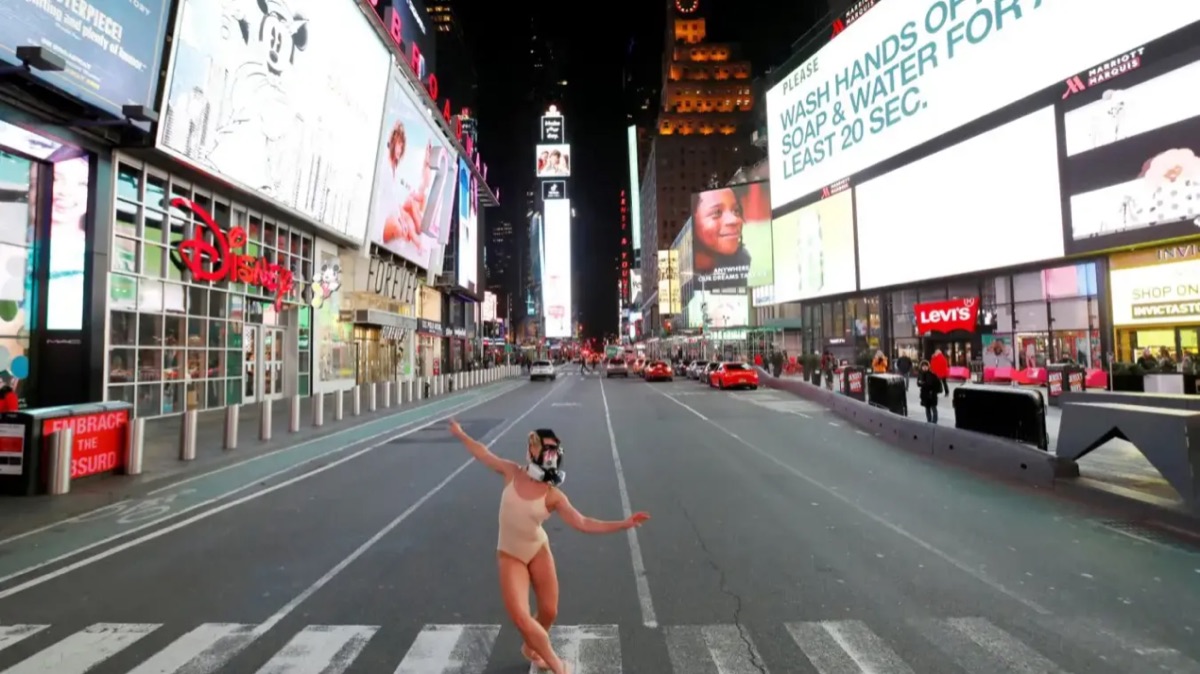
Remember 2020? The eerie quiet. Streets empty enough to film a zombie movie without hiring extras. No planes overhead, just birdsong you hadn’t heard since childhood. Photos of deer wandering through suburbs, foxes brazenly taking over Trafalgar Square. That thick anxiety in your chest that everyone else seemed to feel at the same time.


That’s the magnitude of change. Except this time, there’s no going back. When AI builds itself into the fabric of how we live, there is no “return to the office four days a week.” The arrow only points forward.
And I’ll say it again, because people keep confusing this: This is not Google Glass. This is not a fad. You won’t see a handful of nerds called Glassholes strutting around while the rest of us laugh. If you use a phone, a laptop, a car, a hospital, a checkout, a TV remote — you’ll use AI. You’ll use it because it will be inescapable. Invisible. Sewn into the walls.
So yes, I believe. But — and here comes the rant — I also know something the Silicon Valley elite keep ignoring.
Technology doesn’t succeed at the speed of GPUs. It doesn’t succeed at the speed of VC rounds. It succeeds at the speed of us. And we, dear reader, are gloriously, frustratingly slow to change.
Humans: The Bottleneck
I’ve always known this. I’m a behavioural scientist. My job is to know how people adopt (or don’t).
But the illustrations are everywhere. Twenty years ago, in my very first job, I gave a talk about “digital adoption.” I had a single slide on AI: a neat little bullet point about how the world was going to change.
The room was still trying to process the idea of social media. Millennials were wasting their lives on Facebook, apparently, and the older crowd couldn’t get their heads around Twitter.
One guy raised his hand, completely serious, and asked me: “How do you complete your Twitter feed? It’s really annoying I can’t get to the end of it.”
That was the question. How to finish Twitter.
That’s adoption in miniature: the tech is sprinting ahead, and humans are ambling along behind, trying to find the last page of an infinite scroll.
The Long Slog of Change
Look at history. It’s one long comedy sketch about how slowly we actually move.
Take the Acheulean hand axe. Elegant teardrop of stone. Effective. Deadly. Humans and their cousins used the same design for over a million years. One. Million. Years. Imagine if the iPhone 1 was still the only iPhone in the year 1,003,024. That’s us. That’s our default setting: “good enough, let’s stick with it.”
Or farming. You’d think agriculture was the ultimate killer app: more food, more stability, more kids surviving. Yet when it started in the Fertile Crescent, it took thousands of years to spread across Europe. It moved at about a kilometre a year — the speed of a hungover walk. Because farming was hard graft. Hunting and gathering was familiar. People clung to what they knew.
Or cars. In Britain, when they first appeared, the law demanded every motorcar be preceded by a man waving a red flag. Maximum speed: a brisk stroll. Imagine buying a Ferrari and being legally obliged to hire Dave from the pub to walk in front of it. Adoption only took off after the “red flag law” was scrapped in 1896.

And my personal favourite: the potato scam. Frederick the Great wanted his peasants to plant potatoes to fend off famine. They refused. Ugly vegetable, looked like witchcraft, not interested. So he declared them a royal delicacy, planted them in guarded fields, and ordered soldiers to watch over them. Only the guards were told to be sloppy. Naturally, the peasants started “stealing” the forbidden potatoes, planting them, eating them. And adoption spread like wildfire. The first viral marketing stunt. Powered by spuds.
History is full of this. The tech is there, the benefits are obvious, and yet humans resist until status, law, or psychology tips the balance.
The Psychology of Drag
Why are we like this? Because our brains are designed to resist.
-
Status quo bias: we cling to the familiar, even when better options exist. It’s safer.
Loss aversion: we feel the pain of loss more than the thrill of gain. A 10% improvement isn’t enough if there’s even a whiff of risk.
Habit as neural concrete: once a behaviour sets, it’s locked into striatal circuits. Breaking it isn’t a decision; it’s a grind. Studies show it takes weeks to months of repetition to form new habits, not days.
Predictive brains: under “predictive processing,” your brain is basically a fortune-teller, minimising surprise. Anything unpredictable feels costly, unsafe.
Algorithm aversion: people will dump an AI system after a single error, even if it outperforms them overall. Unless — and this is key — you give them a sliver of control. Let them tweak, override, adjust. That tiny illusion of agency keeps them on board.
This is why adoption curves — the famous S-shapes Rogers mapped out — all look the same. Innovators, early adopters, early majority, late majority, laggards. It’s not the technology that shapes that curve. It’s us. Our psychology.

And it’s why the engineers in Silicon Valley are wrong when they predict “mass adoption” in two years. They’re coding like it’s physics. But it’s psychology. And psychology has a speed limit.
What Flies and What Crawls
The things that don’t demand human behaviour change will fly. Server-side upgrades. Autocomplete that just gets better. Diagnostics that are invisible. Robotics in warehouses you never see. Low friction, high adoption.
The things that do demand change will crawl. Trusting a black box with your medical care. Letting an algorithm make a hiring decision. Changing how you work, how you identify, how you measure your own value. That’s the stuff that grinds, resists, drags.
So yes, the AI revolution is coming. Breathtaking in scope. Unstoppable in direction. But it will succeed at the speed of behaviour change.
Not faster. Not slower. Exactly that.
And the irony — maybe the comedy — is that while the technology barrels forward at lightning speed, we humans will still be clutching our stone axes, waving our little red flags, sneaking potatoes from the king’s garden, and asking, with straight faces, how to get to the end of the Twitter feed.